
Lew Wallace:Shiloh Soldier, Ben-Hur Bard
Building a musical world for a Civil War general, diplomat and the author of Ben-Hur.
Original Score by Nathan Pangrazio
Emmy Award-Winning Musical Composition / Arrangement
Lew Wallace lived several extraordinary lives.
He was a Civil War general, author, political figure and diplomat—and the musical challenge was to create a score capable of moving through those different chapters while still feeling like one coherent story.
The film also required two very different kinds of scoring.
Much of the documentary is driven by dialogue and historical information, where music needed to support the story without competing with it.
Then there were large cinematic sequences—including Civil War reenactments—where the score could expand into something far more dramatic.
The challenge was finding a musical language capable of doing both.
One Life. Several Musical Worlds.
Lew Wallace’s life moved through remarkably different worlds.
There was his childhood.
There was war.
There was his life as a writer.
There was the spiritual dimension surrounding the creation of Ben-Hur.
There was his diplomatic life connected to the Ottoman Empire.
And eventually there was old age, reflection and death.
Each chapter could have justified its own musical vocabulary.
My challenge was to give those chapters individual character without making the film sound as though it had several unrelated scores.
At the same time, this was a documentary filled with information and dialogue. The music couldn’t continually announce itself.
It needed to know when to disappear beneath the story—and when the picture had earned something much larger.
How do you make a historical documentary feel cinematic without allowing the score to overwhelm the history?
This is “Glory and War” — three pages from the written score. Press play on “Homeward” below, then follow the music as you turn through the pages.
The score could not be loaded
Researching the Musical World
Before I began seriously writing, I wanted to immerse myself in the musical world surrounding the story.
I listened extensively to scoring from Civil War films, documentaries and other historical productions.
I researched period instruments, military bugle calls, drum patterns and musical influences.
I visited museums and looked at surviving instruments from the period.
And I searched for musicians who understood this musical vocabulary from the inside.
One of the most important collaborators was a fiddle player with deep experience performing this style of music.
The objective wasn’t to reproduce history academically.
It was to absorb enough of the musical language that when I began composing, those influences could emerge naturally rather than feeling added on afterward.
- Research
- Absorb
- Compose
I wanted the score to feel informed by the period without becoming trapped by it.
It still had to function as a film score.
Before the Orchestra, I Hummed
Some of the most important themes in the film began about as simply as possible.
I would take long walks and record melodic fragments into my phone—what I called my “hum tapes.”
I might accumulate an hour of ideas.
Listening back, much of it might not lead anywhere.
But occasionally one small melodic fragment would contain something worth developing.
Several of the prominent themes for Lew Wallace emerged through that process.
Before orchestration, production or instrumentation, I wanted an idea simple enough to remember.
Something that could be whistled or hummed.
Once the theme existed in that form, we could begin asking what it should become inside the film.
- Hum
- Melody
- Theme
- Fragments
- Development
- Full Statement
That also gave us a way to think about the feature as a whole.
A theme didn’t always need to arrive completely formed.
We could introduce pieces of it earlier, reshape it as Wallace’s life developed, and reserve its fullest statement for a moment that had earned it.
Three Different Sides of the Score
Childhood
For Wallace’s childhood, I wanted something exploratory and alive.
The music drew on a fiddle-driven vocabulary with a dance-like quality, performed by a musician who understood the style deeply.
We combined that live performance with an orchestral mock-up behind it.
That combination became an important part of the production approach: place a real musician with character and authenticity at the center of the cue, then build the larger cinematic world around that performance.
The Main Theme
The main theme occupies the more heroic side of Wallace’s story.
Trumpet and a larger orchestral palette allowed the music to expand into the scale of his military life and the film’s Civil War sequences.
I was drawn to the tradition of large dramatic film scoring—scores such as Jerry Goldsmith’s work on Patton were part of the broader musical vocabulary I had absorbed.
But the objective was never imitation.
The objective was to find a theme that belonged to this particular story and could carry genuine dramatic weight when the film opened up.
Hometown
“Hometown” represents another side of the film entirely.
It is warmer, smaller and more intimate—a melodic idea centered around solo violin with a restrained orchestral background and touches of guitar.
After the scale of war and public life, music like this could return Wallace to something personal.
Home.
Family.
Memory.
Using Live Musicians Where They Mattered Most
The score combined produced orchestral elements with a small group of live soloists, including violin, clarinet, cello, flute and guitar.
Rather than treating the live instruments as decoration, I wanted them to become some of the most exposed voices in the score.
The orchestral production could provide scale.
The live players could provide individuality.
For the recording, we worked in a church environment that gave the soloists a natural acoustic space.
And when a musician had genuine expertise in the musical style, I wanted to leave room for that expertise to affect the score.
There were moments when the performers could improvise around the themes or contribute stylistic details that went beyond what I could communicate simply by writing notes on a page.
That collaboration brought another level of authenticity to the music.
Sometimes the best thing a composer can do is give an exceptional musician enough room to bring their own knowledge into the score.
Approximately 90 Minutes of Music in 30 Days
Lew Wallace was one of the fastest large scoring projects I had completed at that point.
We produced approximately 90 minutes of music in 30 days.
The beginning of the process was intentionally slower.
We started with more demanding material and spent additional time establishing the identity of the score.
Once the filmmakers and I felt that we had found the musical language, the process accelerated substantially.
That early investment paid for itself later.
Instead of rediscovering the score with every cue, we had themes, instrumentation and a shared creative vocabulary to draw from.
The production could move quickly because the underlying musical decisions had already been made.
Find the language first.
Then move fast.
When the Score Lives Beyond the Film
One of my personal goals when scoring a film is to create music that works completely inside the picture but still has enough musical identity to survive outside it.
Lew Wallace gave me that experience.
Selections from the score were later performed in concert by orchestras.
For me, that was particularly satisfying.
The score had been created to serve dialogue, reenactments, historical storytelling and the emotional arc of one film.
But the themes could still stand on a stage without the picture.
The score should belong to the film. But when possible, I want the music to have a life of its own.
The Score Beyond the Film
The music from Lew Wallace did not end with the finished soundtrack. Selections from the score went on to receive live orchestral performances, giving the music an opportunity to exist independently from the picture.
This rehearsal offers a glimpse of that transition — music originally written to serve the film being prepared for performance by a live orchestra.
An Emmy-Winning Score
The score for Lew Wallace became an important milestone in my career.
I received an Emmy Award for the music, in the Musical Composition / Arrangement category.
The project later received Telly Award recognition as well.
I had previously experienced the excitement of an Emmy nomination for another documentary score.
Winning for Lew Wallace was different.
I knew how much research, writing and production had gone into the music, and being there in person when the work was recognized remains one of the significant moments of my career.

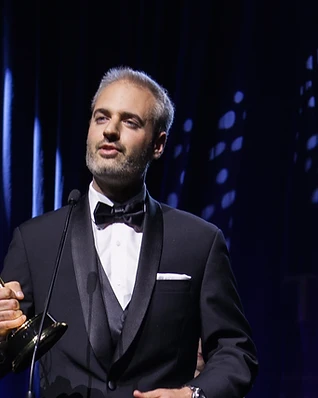
Emmy Award
Musical Composition / Arrangement
Telly Award Recognition
What I Took From the Project
Lew Wallace reinforced several ideas that still influence the way I approach scoring.
- Research matters—but eventually you have to stop researching and make music.
- A strong theme can unify material that otherwise seems stylistically far apart.
- Live musicians can bring knowledge and personality to a score that can’t always be manufactured in production.
- The most difficult creative decisions are worth solving early.
- And a documentary doesn’t need to sound small simply because much of its music lives beneath narration and dialogue.
- When the picture calls for scale, the score should be capable of meeting it.
Looking for the Musical Identity of Your Film?
If you’re developing a feature, documentary or other narrative project, tell me about the film, where you are in the process and what you’re hoping the music can bring to the story.